
SEO for Beginners in India (Simple Step-by-Step Guide2026)
This is a complete pillar guide to SEO for beginners in India. If you are new to blogging, digital marketing, or online business, this page will give you a full foundation — from basics to advanced concepts.
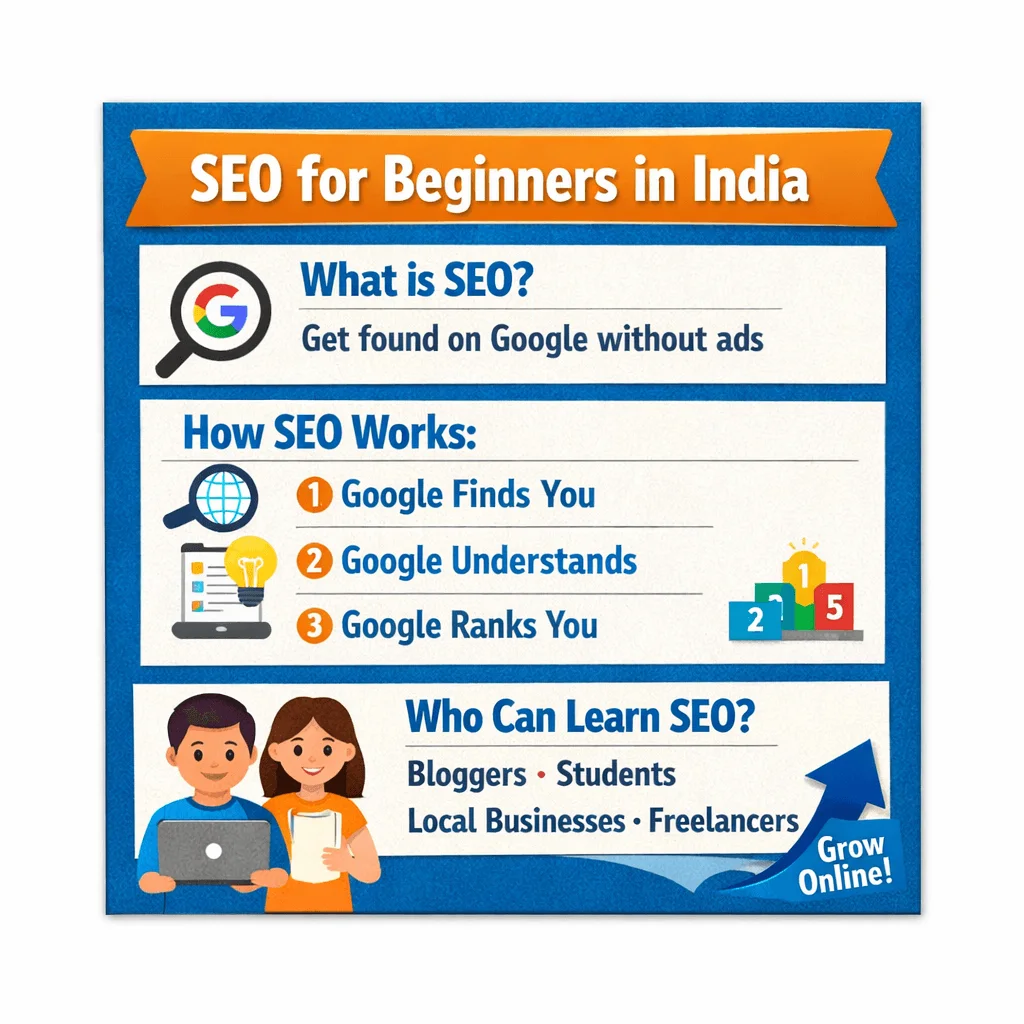
Beginner-friendly • India-focused • Practical approach
Start learning SEO the right way →
SEO for beginners in India is one of the most important skills to learn in 2026 if you want to grow online or build a digital career. Whether you are a student, job seeker, or business owner, understanding how SEO works can help you increase website traffic, generate leads, and improve online visibility.
WHAT IS SEO
SEO = Making your content visible on Google without paying for ads. Examples:
- Best laptop under 50000
- Computer institute near me
- Blogging kaise shuru kare
- SEO for Beginners in India
Why SEO Matters in India
- Growing internet users beyond metro cities
- Massive opportunity in tier 2 and tier 3 towns
- Free traffic compared to ads
- Builds long-term credibility
- Useful for bloggers, institutes, freelancers
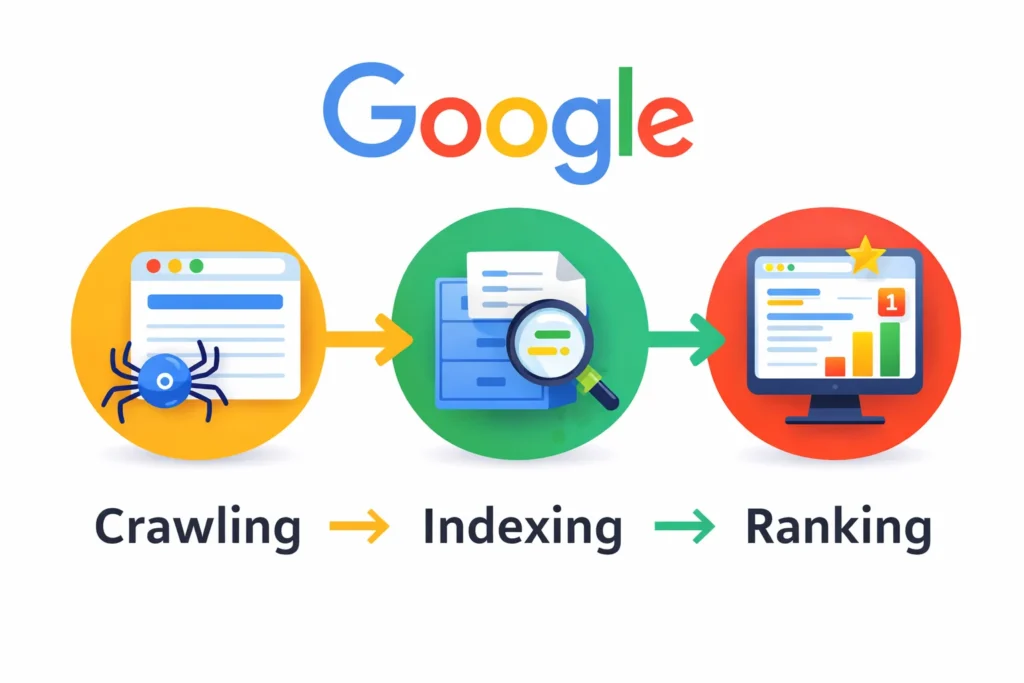
HOW SEO WORKS
STEP-1
HOW GOOGLE CRAWLS WEBSITES
STEP-2
HOW GOOGLE INDEXES PAGES
STEP-3
HOW GOOGLE RANKS CONTENT
TYPES OF SEO
- Optimize title tags and meta descriptions
- Use proper headings
- Add relevant keywords
- Optimize images
- Internal linking
- High-quality, content
- Build quality backlinks
- Guest posting
- Social media sharing
- Directory submissions
- Influencer mentions
- Forum participation
- Fast website loading speed
- Mobile-friendly design
- Secure website
- Site structure & sitemap
- Fix broken links
- Clean URL structure
- Optimize Google Business Profile
- Use city-based keywords
- Get local reviews
- List in local directories
- Updates posts on GMB
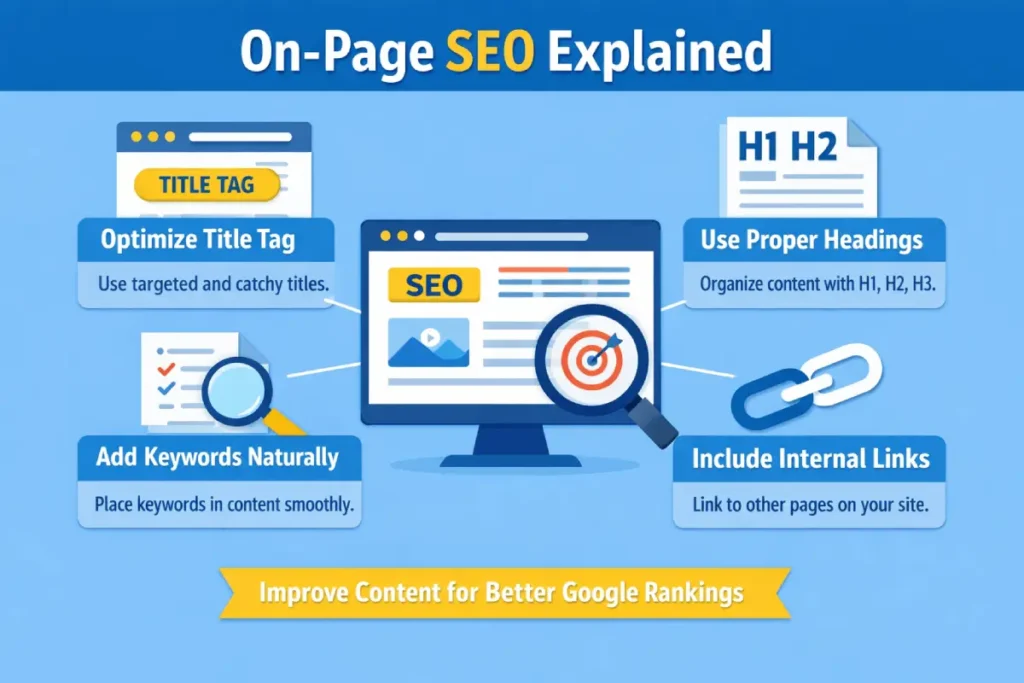
ON PAGE SEO EXPLAINED
On-page SEO refers to optimizations made directly on the webpage to help search engines understand the content and improve rankings.
- Optimize title tags – The title tag is one of the strongest ranking signals. It tells search engines and users what the page is about and influences whether people click your result in Google search.
- Use proper headings (H1, H2, H3) – Headings organize your content and make it easier for both readers and search engines to understand the structure of the page. A clear heading hierarchy improves readability and SEO.
- Use keywords naturally in content – Keywords should appear naturally in the introduction, headings, and body of the article. This helps search engines understand the topic without making the content look forced or spammy.
- Add internal links – Linking to other relevant pages on your website helps search engines crawl your site better and allows readers to explore related topics.
- Optimize images with alt text – Image alt text describes what the image represents. It helps search engines understand visual content and improves accessibility.
TECHNICAL SEO BASICS
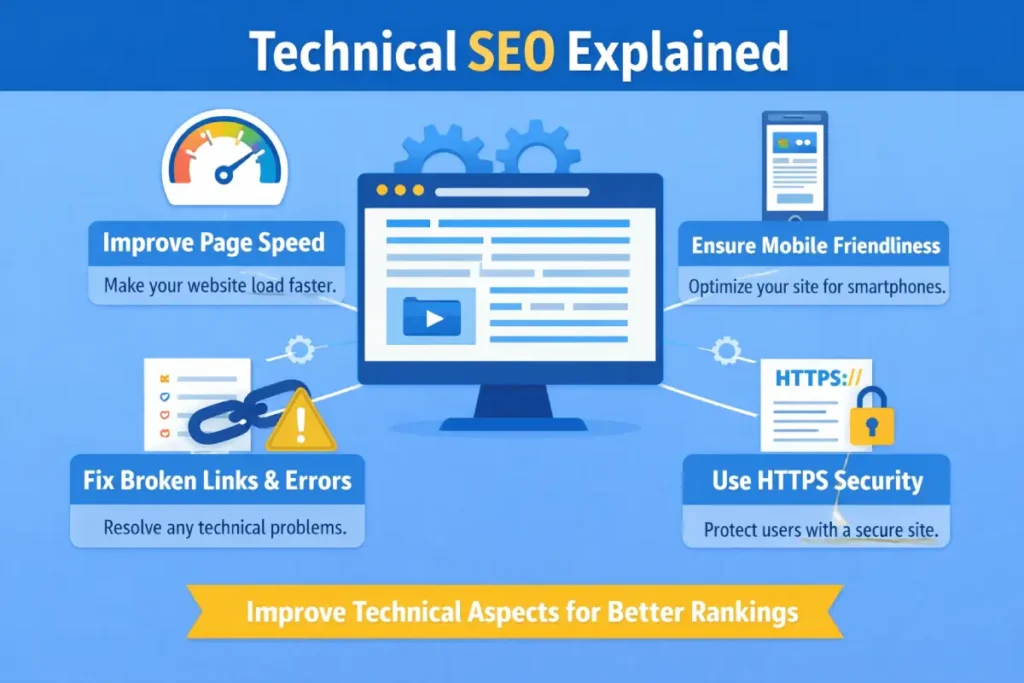
Technical SEO focuses on improving the technical structure of a website so that search engines can crawl and index it efficiently.
- Improve website speed – Faster websites provide better user experience and are preferred by search engines. Optimizing images, reducing heavy scripts, and using good hosting can improve page speed.
- Ensure mobile friendliness – Most users access websites from smartphones, especially in India. A mobile-friendly website improves usability and helps search engines rank the page better.
- Fix broken links and errors – Broken links or technical errors can affect how search engines crawl a website. Regularly checking and fixing these issues helps maintain site health.
- Use secure HTTPS connection – HTTPS protects user data and builds trust. Search engines also treat secure websites as more reliable.
OFF PAGE SEO FUNDAMENTALS
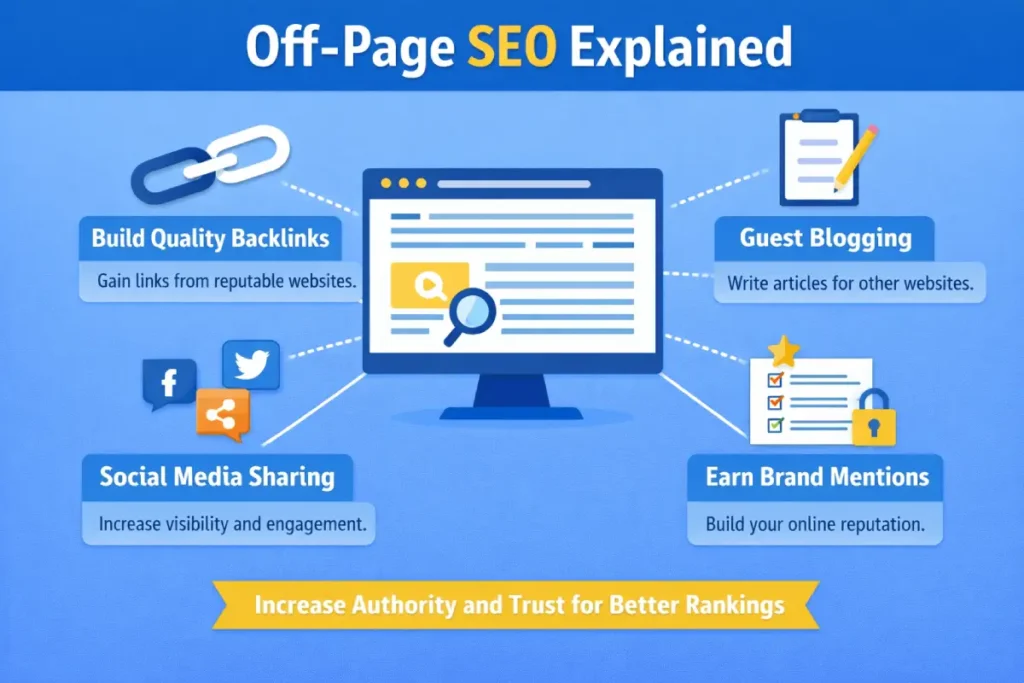
Off-page SEO refers to activities performed outside your website to improve its authority and credibility in search engines. Search engines view these signals as indicators that your content is trustworthy and valuable, which can help improve rankings.
- Build quality backlinks – Backlinks are links from other websites pointing to your site. When reputable websites link to your content, search engines treat it as a sign of trust and authority.
- Guest blogging on relevant websites – Writing articles for other blogs or websites in your niche helps you reach a wider audience and earn valuable backlinks.
- Social media sharing – Sharing your content on social platforms increases visibility and can bring more visitors to your website. Higher engagement often leads to more people linking to your content.
- Brand mentions and online reputation – When your website or brand is mentioned on other websites, forums, or blogs, it helps build credibility and strengthens your online presence.
- Listing in trusted directories – Submitting your website to reputable business directories or niche listings can help search engines discover your site and improve its online visibility.
Strong off-page SEO signals tell search engines that your website is trusted, relevant, and valuable to users, which can positively influence search rankings over time.
LOCAL SEO BASICS
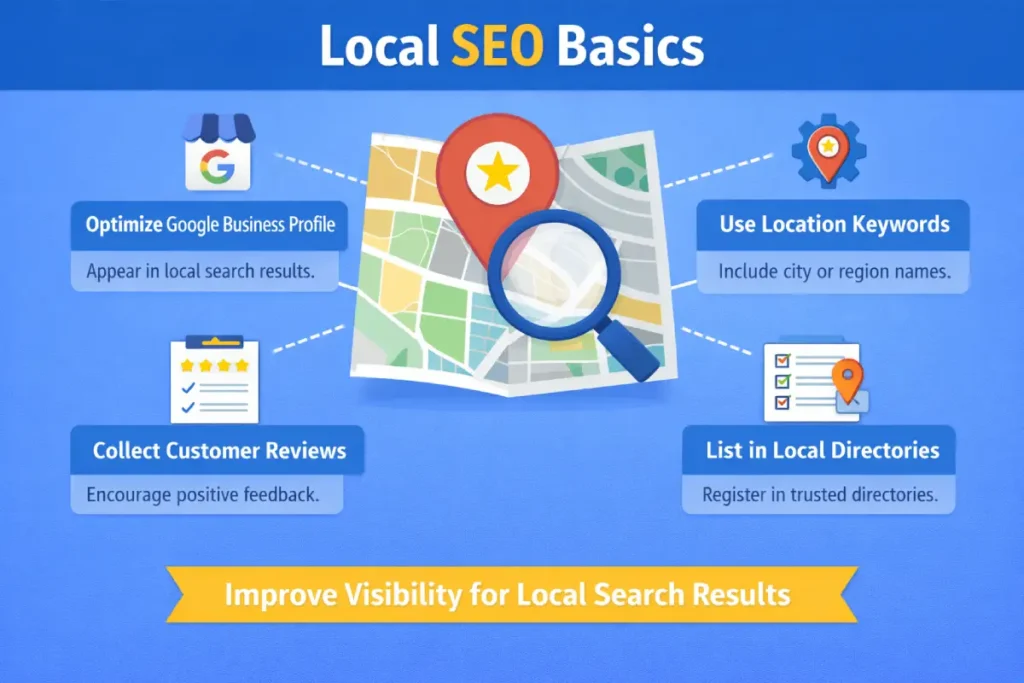
Local SEO helps businesses appear in location-based search results, especially when people search for services near them.
- Optimize Google Business Profile – Creating and updating a Google Business Profile helps businesses appear in local search results and Google Maps.
- Use location-based keywords – Including city or region names in your content helps search engines understand the geographical relevance of your business.
- Encourage customer reviews – Positive reviews improve credibility and can influence how businesses appear in local search rankings.
- List your business in local directories – Registering your business on trusted local directories increases visibility and helps build local authority.
Who Should Learn SEO
SEO is a valuable skill for anyone who wants to grow online visibility without relying completely on paid advertising. It helps individuals and businesses attract organic traffic from search engines and build a sustainable online presence.
Bloggers and content creators who want their articles to reach more readers through Google search.
Small business owners looking to attract customers online without spending heavily on ads.
Students and job seekers interested in building a career in digital marketing.
Freelancers and digital marketers who want to offer SEO services to clients.
Website owners and entrepreneurs aiming to increase traffic, leads, and online growth.
How Beginners Should Practice SEO
The most effective way to learn SEO is through practical practice rather than theory. Beginners should apply basic SEO techniques on a small website or blog to understand how search engines respond to content.
Start a small blog or website to practice SEO concepts.
Write 8–10 helpful articles targeting simple keywords.
Learn basic keyword research to understand what people search on Google.
Track performance using Google Search Console to see impressions and rankings.
Update and improve articles regularly based on search performance.
Practicing SEO consistently on your own website helps beginners understand how search engines rank content and gradually improve their optimization skills.
SEO ROADMAP FOR BEGINNERS IN INDIA 2026
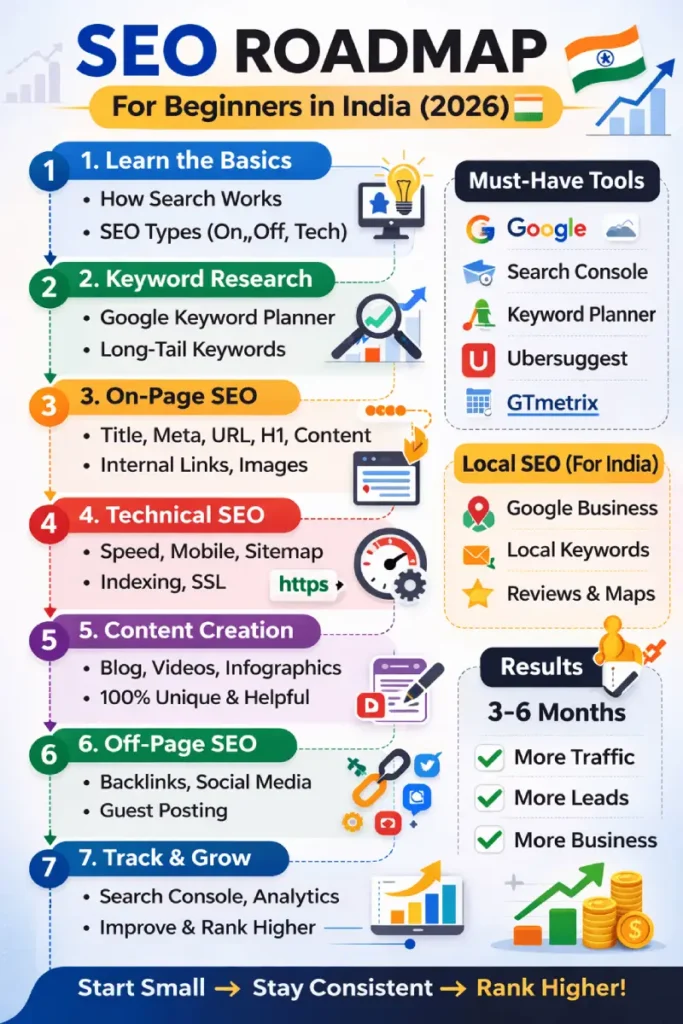
- Understand how search works
- Pick beginner-friendly topics
- Select helpful content
- Learn basic keyword research
- Do On-Page SEO
- Complete Technical SEO
- Do the Content Creation
- Do Off- Page SEO
- Track performance on GSC
- Analyze Google Analytics
- Stay consistent for 6–12 months
Free SEO Tools for Beginners in India
Starting SEO does not require expensive tools. In fact, many beginners in India grow their websites using completely free SEO tools. If you understand how to use the right tools, you can handle keyword research, tracking, optimization, and analysis without spending money.
Here are the most useful free SEO tools beginners should start with:
1. Google Search Console (Must Use)
Google Search Console helps you understand how your website performs in Google search.
You can track:
- Keyword rankings
- Impressions and clicks
- Indexing issues
- Mobile usability
- Core Web Vitals
This is the most important SEO tool because the data comes directly from Google.
2. Google Analytics
Google Analytics shows how users behave on your website.
You can learn:
- Traffic sources
- Top-performing pages
- User engagement
- Bounce rate
It helps you understand what content is working and what needs improvement.
3. Google Keyword Planner
Best free keyword research tool for Indian search volume.
Use it to:
- Find beginner-friendly keywords
- Discover search trends
- Analyze competition levels
Ideal for bloggers targeting India-specific audiences.
4. Google Trends
Google Trends helps identify trending topics and seasonal keywords.
You can:
- Compare keywords
- Discover rising topics
- Track regional search trends
Very useful for content planning and YouTube SEO.
5. Ubersuggest (Free Version)
Ubersuggest provides:
- Keyword ideas
- SEO difficulty scores
- Competitor insights
- Content ideas
Good for beginners who want simple keyword insights without complexity.
6. PageSpeed Insights
Website speed is a ranking factor. PageSpeed Insights helps you:
- Test page speed
- Improve loading time
- Optimize Core Web Vitals
Fast websites rank better and convert more visitors.
7. Grammarly (Content Quality Tool)
Grammarly helps improve:
- Readability
- Grammar
- Clarity
Better writing = better user engagement = better SEO.
Best Free Tool Combo for Beginners
If you are just starting, use this combination:
- Google Search Console
- Google Keyword Planner
- PageSpeed Insights
This is enough to build a strong SEO foundation without investment.
SEO CAREER IN INDIA (Opportunities & Reality)
SEO is one of the fastest-growing digital skills in India. With businesses shifting online, the demand for SEO professionals continues to rise across startups, agencies, and freelancers.
But before choosing SEO as a career, it’s important to understand both opportunities and realities.
Why SEO Is Growing in India
Several factors are driving SEO demand:
- Rapid digital adoption in Tier-2 and Tier-3 cities
- Growth of local businesses going online
- Increase in blogging and content creators
- Rise of eCommerce and local services
This makes SEO a long-term skill, not a short-term trend.
Career Paths in SEO
Once you build basic skills, you can explore multiple roles:
- SEO Executive (entry level)
- SEO Analyst
- SEO Manager
- SEO Consultant
- Freelance SEO Specialist
- Blogger or niche site owner
Many professionals start with jobs and later shift to freelancing or blogging. SEO bet practices has been published in Google’s official SEO Starter Guide, which is the ready reference for everyone in the field of SEO.
Salary Expectations in India
Salary depends on skills and experience.
Typical ranges:
- Beginner: ₹15,000 – ₹30,000/month
- Intermediate: ₹40,000 – ₹80,000/month
- Advanced: ₹1L+ per month
- Freelancers: No upper limit
Experienced SEO consultants often earn more than traditional jobs.
Freelancing Opportunities
SEO is one of the easiest digital skills to monetize online.
Popular platforms:
- Upwork
- Fiverr
- Freelancer
- Many Indian freelancers earn in dollars by serving global clients.
Reality Check (Important)
SEO is not instant success.
Challenges include:
- Slow results
- High competition
- Constant algorithm updates
- Need for patience
If you like long-term growth and learning, SEO is a great career. If you want quick money, it may feel slow.
Who Should Choose SEO as a Career?
SEO is ideal for:
- Bloggers
- Writers
- Students
- Freelancers
- Small business owners
- Digital marketers
It rewards consistency more than technical genius.
Common SEO MISTAKES BEGINNERS MUST AVOID
Most beginners struggle in SEO not because it is difficult, but because they repeat avoidable mistakes. If you stay aware of these common errors, you can save months of effort and rank faster.
Here are the biggest SEO mistakes beginners make:
1. Keyword Stuffing
Overusing the same keyword makes content unreadable and spammy.
Instead:
Use keywords naturally and focus on readability.
2. Writing Thin Content
Short, low-value articles rarely rank today.
Google prefers:
- In-depth guides
- Helpful content
- Real insights
- Always aim to solve a real problem.
3. Ignoring Search Intent
Many beginners write what they want instead of what users search. beginners should understand search intent.
Before writing, ask:
“Why is someone searching this keyword?”
Matching intent is critical for ranking.
4. No Keyword Research
Writing without keyword research is like shooting in the dark.
Always validate:
- Search demand
- Competition
- User intent
Even basic keyword research improves results dramatically.
5. Poor On-Page SEO
Common on-page mistakes include:
- Missing meta titles
- No internal links
- Weak headings
- No image ALT text
On-page SEO is the easiest ranking win for beginners.
6. Ignoring Mobile Users
Most Indian traffic comes from mobile devices.
If your site is:
- Slow
- Hard to read
- Poorly formatted
You will lose rankings and engagement.
7. Chasing Backlinks Too Early
Many beginners obsess over backlinks and ignore content quality.
Reality:
Content quality first, backlinks later.
Strong content naturally attracts links over time.
8. Expecting Fast Results
SEO takes time.
Beginners often quit because they expect rankings in weeks.
Realistic timelines:
- 1–2 months: Learning phase
- 3–6 months: Initial traction
- 6–12 months: Strong growth
Patience is a competitive advantage in SEO.
How Long SEO Takes
Short and honest.
- 3–6 months: Early visibility
- 6–12 months: Growth phase
- 12+ months: Authority phase
Common Beginner Mistakes
- Expecting instant traffic
- Copying content
- Ignoring consistency
- Writing only for keywords
- No internal linking
FAQs About SEO for Beginners
SEO usually takes 3 to 6 months to show visible results. Competitive niches may take longer. Consistency and quality content speed up the process.
SEO itself is free because you are not paying for clicks like ads. However, you may invest in tools, hosting, or content over time.
Yes. Most SEO beginners succeed without coding knowledge. Basic technical understanding helps, but it is not mandatory.
Yes. Even with AI tools, search engines still rely on high-quality content and trusted websites. SEO is evolving, not disappearing.
Yes, especially in the beginning. Many bloggers start with a smartphone and later upgrade to a laptop for efficiency.
Yes. SEO offers strong demand, remote opportunities, and freelancing potential. It is one of the most flexible digital careers available today.
Beginner-friendly niches include:
- Education
- Blogging
- Technology
- Local services
- Food and travel
Choose a niche you can write about consistently.
Backlinks help, but they are not required initially. Many new blogs rank using strong content and proper on-page SEO alone.
The first step to learn SEO is understanding how search engines work. Before applying any optimization techniques, beginners should learn the basic process through which search engines discover and rank web pages. This process generally includes three stages: crawling, indexing, and ranking.
Once this foundation is clear, the next step is to learn keyword research. Keywords represent the exact phrases people type into search engines. By identifying relevant keywords related to your topic, you can create content that matches what users are searching for.
After keyword research, beginners should focus on creating helpful content and applying basic on-page SEO. This includes writing clear headings, optimizing titles, using keywords naturally, adding internal links, and improving readability. Practicing SEO on a small blog or website is one of the best ways to understand how search optimization works in real situations.
Yes, SEO can absolutely be learned without coding. Many successful bloggers, digital marketers, and business owners practice SEO without having any programming knowledge. The majority of SEO work focuses on content creation, keyword research, and website optimization, which do not require coding skills.
Tools like WordPress, SEO plugins, and website builders make it easy to apply SEO techniques such as optimizing titles, meta descriptions, headings, and internal links. The free SEO tools allow beginners to implement SEO best practices without writing code.
However, learning some basic technical concepts can be helpful over time. Understanding ideas like website speed, mobile optimization, and structured page layouts can improve SEO performance. While coding knowledge can be useful for advanced technical SEO, it is not necessary to start learning or practicing SEO effectively.
Future of SEO in India
- AI-assisted search growing
- Voice search in Hindi rising
- Local SEO becoming powerful
- Hybrid creators (blog + video) winning