
About Technical SEO for Beginners
Table of Contents
Technical SEO for beginners is the foundation of every successful website. Even the best articles cannot rank if search engines cannot properly crawl, index, and understand your site. Therefore, learning the basics of technical SEO is extremely important for bloggers, students, and small businesses starting their digital journey.
In India, thousands of new websites are launched every month. Many beginners focus only on writing content or adding keywords. However, they often ignore technical optimization, which silently affects their search visibility. This guide explains technical SEO in simple language so that even a young learner can understand the concepts clearly.
This article will walk you through practical steps, tools, and strategies that can help your website perform better on search engines in 2026 and beyond. If you are completely new to search engine optimization, you can start with our complete SEO guide for beginners in India.
What is Technical SEO?
Technical SEO refers to optimizing the technical structure of a website so that search engines can easily access, understand, and rank its pages.
In simple words, technical SEO ensures that:
- search engines can discover your pages
- your website loads fast
- users can browse your site smoothly
Think of technical SEO like the foundation of a building. If the foundation is weak, the building cannot stand strong. Similarly, if technical SEO is poor, even high-quality content may struggle to rank. Once the technical structure of your website is ready, the next step is learning on page SEO optimization techniques.
Why Technical SEO Matters in 2026
Search engines have become much smarter over the years. Google now evaluates websites using hundreds of ranking factors.
Some of the most important technical factors include:
| Factor | Why It Matters |
| Website speed | Faster websites provide better user experience |
| Mobile friendliness | Most users browse from smartphones |
| Secure connection (HTTPS) | Improves trust and security |
| Core Web Vitals | Measures loading and visual stability |
| Site structure | Helps search engines understand content |
In India, internet users often browse using mobile devices and moderate internet speeds. Therefore, optimizing website performance becomes even more important for Indian websites.
A technically optimized site not only ranks better but also keeps visitors engaged for longer. Many beginners use free SEO tools for beginners to identify technical errors and improve website performance.
How Search Engines Work
To understand technical SEO, it is important to know how search engines process websites.
Search engines follow a three-step process.
Crawling
Crawling is the process where search engine bots explore the internet and discover new web pages.
These automated bots are called web crawlers or spiders.
They move from one page to another using links and collect information about each page.
If your website has broken links or blocked pages, crawlers may miss important content.
Indexing
Once a page is discovered, search engines store it in their database. This process is called indexing.
If a page is not indexed, it will never appear in search results.
You can check indexed pages by typing:
site:yourwebsite.com
in Google search.
Ranking
After indexing, search engines decide which pages should appear in search results.
The ranking depends on factors such as:
- content quality
- backlinks
- user experience
- website performance
Technical SEO helps ensure that your page is eligible to compete for rankings.
Technical SEO vs On-Page SEO vs Off-Page SEO
Beginners often confuse different types of SEO. Understanding the difference helps build a strong SEO strategy.
| SEO Type | Focus Area | Example |
| Technical SEO | Website infrastructure | Speed, crawlability |
| On-Page SEO | Content optimization | Keywords, headings |
| Off-Page SEO | Website authority | Backlinks |
All three types of SEO work together to improve search visibility.
Step-by-Step Technical SEO Setup
Let us now explore practical steps beginners can implement.
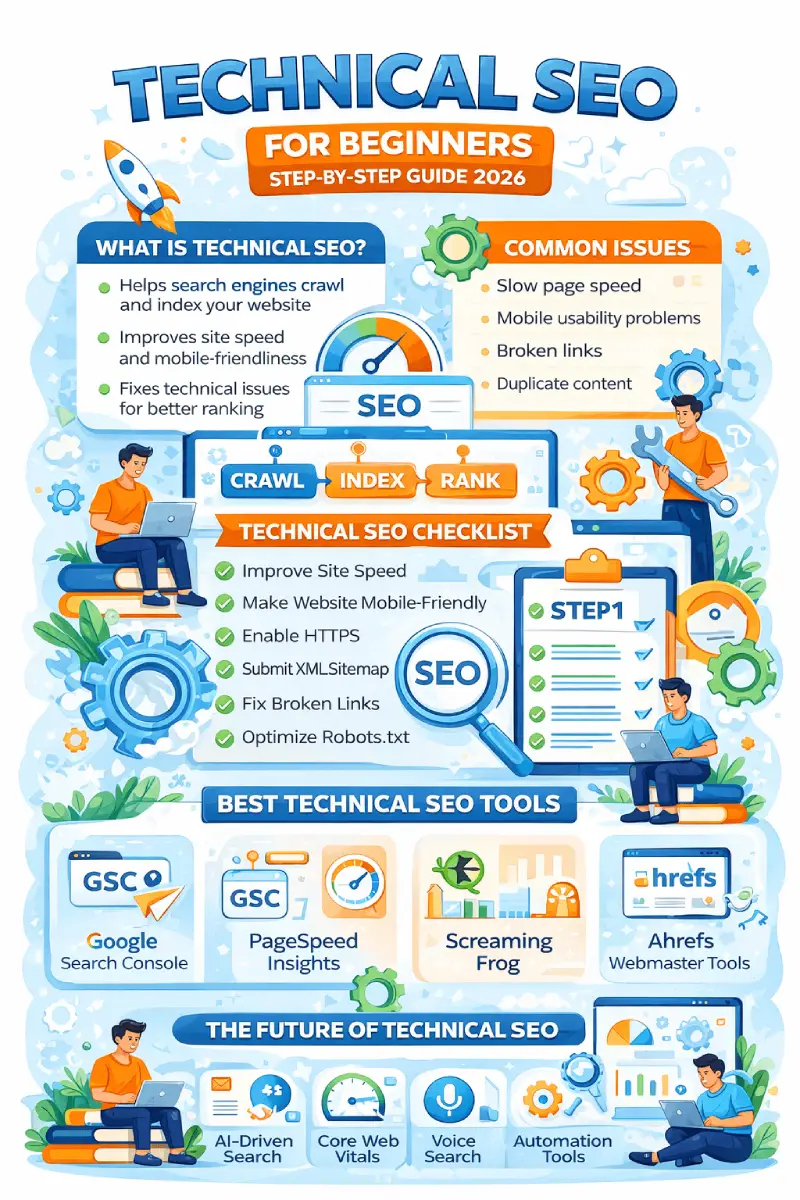
Step 1: Improve Website Speed
Website speed is one of the most important ranking factors.
A slow website often causes visitors to leave before reading the content.
Common causes of slow websites include:
- large image files
- low-quality hosting
- too many plugins
- heavy themes
Speed Improvement Methods
| Method | Benefit |
| Image compression | Faster loading time |
| Browser caching | Quick repeat visits |
| Lightweight themes | Better performance |
| CDN usage | Faster global delivery |
Improving speed greatly enhances user experience.
Step 2: Ensure Mobile Friendliness
Google now uses mobile-first indexing. This means Google primarily evaluates the mobile version of your website.
A mobile-friendly website should have:
- responsive design
- readable text size
- properly spaced buttons
- fast loading speed
Since many Indian users browse the internet through smartphones, mobile optimization is essential.
Step 3: Create an XML Sitemap
An XML sitemap acts as a roadmap for search engines.
It lists important pages of your website so that crawlers can discover them easily.
Example:
yourwebsite.com/sitemap.xml
Submitting your sitemap in Google Search Console helps search engines crawl your site more efficiently.
Step 4: Optimize Robots.txt File
The robots.txt file tells search engines which pages they should crawl and which pages they should avoid.
Example structure:
User-agent: *
Disallow: /wp-admin/
Allow: /wp-admin/admin-ajax.php
Incorrect configuration may accidentally block important pages from search engines.
Step 5: Enable HTTPS Security
HTTPS ensures secure data transfer between users and the website.
Benefits include:
- improved user trust
- better SEO signals
- protection of user data
Most modern hosting providers offer free SSL certificates.
Step 6: Fix Broken Links
Broken links create poor user experience and waste crawl resources.
Common issues include:
- deleted pages
- incorrect URLs
- outdated links
Regular website audits help detect and fix these problems quickly. While technical SEO improves website structure, off page SEO strategies help build authority and trust.
Technical SEO Checklist for Beginners
Before publishing or optimizing a website, beginners should verify these points.
| Task | Priority |
| Submit XML sitemap | High |
| Improve website speed | High |
| Enable HTTPS | High |
| Ensure mobile friendliness | High |
| Fix broken links | Medium |
| Check indexing status | Medium |
| Optimize robots.txt | Medium |
This checklist covers the most important technical SEO elements.
Best Technical SEO Tools
Several tools help beginners identify technical issues easily.
| Tool | Best Use | Free Version |
| Google Search Console | Indexing and crawl errors | Yes |
| PageSpeed Insights | Website speed analysis | Yes |
| Screaming Frog | Technical site audit | Limited |
| Ahrefs Webmaster Tools | SEO monitoring | Limited |
| GTmetrix | Performance testing | Yes |
Using these tools regularly helps maintain website health.
Common Technical SEO Mistakes
Beginners often make mistakes that silently affect rankings.
Blocking Pages with Robots.txt
Important pages may accidentally get blocked from search engines.
Ignoring Website Speed
Heavy images and slow hosting reduce performance.
Poor Website Structure
Confusing navigation makes it harder for search engines to understand the site.
Duplicate Content
Duplicate pages can reduce search engine trust.
Avoiding these mistakes improves both user experience and rankings.
Technical SEO for Indian Websites
In India, certain practical factors influence website performance.
Mobile Internet Dominance
Most users browse using smartphones rather than desktops.
Affordable Hosting
Many beginners use budget hosting, which sometimes affects website speed.
Local Business SEO
Small businesses depend heavily on local search results.
Therefore, focusing on mobile optimization and speed becomes extremely important for Indian websites.
Future of Technical SEO
Technical SEO will continue evolving as search technology advances.
Important trends shaping the future include:
AI-Powered Search
Search engines are increasingly using artificial intelligence to understand user intent.
Voice Search Growth
More people now search using voice assistants.
Structured Data and Rich Results
Structured data helps websites appear in rich snippets and featured results.
Automation Tools
Modern SEO tools are becoming smarter and can automatically detect technical issues.
Learning technical SEO today will remain valuable in the coming years.
People Also Search For
- technical SEO checklist
- technical SEO tools
- technical SEO audit
- website speed optimization
- on-page vs technical SEO
These related topics can help expand your SEO knowledge further.
Final Thoughts
Technical SEO for beginners may sound complex initially, but the fundamentals are quite straightforward. When your website loads quickly, works smoothly on mobile devices, and allows search engines to crawl and index pages easily, you build a strong foundation for SEO success.
For bloggers, students, and entrepreneurs in India, learning technical SEO can open new opportunities in digital marketing, online business, and content creation. By implementing the steps explained in this guide and continuously improving your website’s technical health, you can steadily grow your visibility on search engines and build long-term organic traffic.
About the Author
Sanjiv Kumar is a trainer, educator, and digital skills mentor who focuses on helping beginners understand blogging, SEO, and online earning opportunities. Over the years, he has worked closely with students, young professionals, and aspiring bloggers from both small towns and large cities across India. Through these interactions, he has gained practical insight into the real challenges beginners face when starting their digital journey.
His approach is simple and practical. Instead of complicated technical explanations, he believes in breaking down digital marketing concepts into clear, step-by-step guidance that anyone can understand and apply. Many of his learners are first-time website owners who want to build blogs, learn SEO, or explore online career options.
On Digitalsanjiv.com, he shares beginner-friendly resources on SEO, blogging, digital tools, and online growth strategies. His content combines teaching experience, real-world observations, and practical examples that work in the Indian context.
When he is not writing or teaching, he spends time researching new developments in search engine algorithms, digital marketing trends, and emerging online opportunities for learners and small businesses. Wikipedia reference on Search Engine Optimization.
You May also like:
- On Page SEO for Beginners in India (2026): Step-by-Step Practical Guide
- Free SEO Tools for Beginners (2026 Guide)
- How to Start Blogging in India with Zero Investment (Real Beginner Guide)
- How Bloggers Earn Money in India (Step-by-Step Guide for
Frequently Asked Questions(FAQs)
Is technical SEO difficult for beginners?
No. Basic technical SEO tasks such as submitting a sitemap and improving speed are simple to learn.
Technical improvements can show results within weeks, especially if indexing or speed issues are fixed.
Yes. Even small blogs benefit from proper technical optimization.